Monday, 8 May 2023

Knee Pain Exercises for Runners: Preventative and Recovery Technique

 Runner's knee, anterior knee discomfort, or Patellofemoral discomfort Syndrome (PFPS) are all terms used to describe the same ailment. This is the most frequent running injury, affecting 19–30% of female runners and 1–25% of male runners, according to a recent review. The major symptom is under the kneecap, which is first minor and only felt during running but becomes more severe and more noticeable between runs if left untreated. Let's learn about the best workouts for knee discomfort in this article.


What is a runner’s knee?

A runner's knee can affect novice, moderate, and experienced runners.

The structure of the knee cap is unaffected by a runner's knee. Instead, it's how your knee's muscles work on a regular basis.

Knee injuries occur when you take a step and flex your knees.

If your mechanics are out of rhythm, you can also experience greater pain.

It also results in groyne discomfort in addition to kneecap pain. The front of the knee often hurts behind or at the kneecap.


Knee pain reduction exercise

Double Knee To Chest:- As you begin, start on your back with your legs extended. Bring your knees together while placing your hands below the region of each knee on top of your shin. Another location to rest your hands is on the backs of your thighs. After 10 seconds, raise your knees to your chest and then go back to your starting position.


Step-Up With Dumbbells And Knee Drive:- With your feet hip-width apart, stand facing a bench, step, or box. Hold a dumbbell with your right hand. Strike your left leg at a 90-degree angle towards your chest as you ascend the box. Make a fresh start. Sync. Change sides.


Clamshell-shaped forearm side planks:- Your left arm should be on the floor with your left hand on your hip. Place your left side down. Make sure the hips are inclined 45 degrees and that both knees are bent 90 degrees. The feet, knees, and hips ought to be piled on top of one another. Lift your hips as high as you can to form a straight line from your shoulders to your hips in order to perform a modified side plank. Keep your upper leg (right) bent as you lift it, then swivel your hip to elevate your right knee towards the ceiling. It's crucial to use your glutes. Lowering the leg back down should maintain the plank posture. Keep saying it. Alternate sides after that.

Knee Adduction:- Put one foot in front of the chair and the other behind it. Your leg should be straight and pressed firmly on the chair's base. After 10 seconds, place the leg back on the floor.


Final words:-

 These exercises are among the greatest for treating knee pain, according to Dr. Kunal, who runs the best orthopaedic hospital in Mumbai. However, go to the hospital right away to learn more if you've been having any problems.


https://drkunalpatel.com/knee-pain-exercises-for-runners-preventative-and-recovery-technique/

Thursday, 4 May 2023

5 Reasons Arthroscopic Surgery is the Best Option for Shoulder Injuries

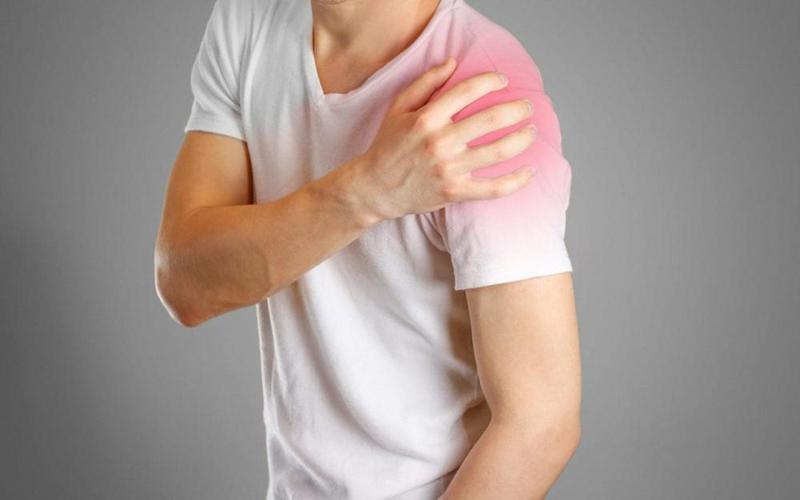
 A joint arthroscopy examines a joint's interior structure in order to diagnose and treat issues there. During an arthroscopic examination, a pencil-sized tool with a tiny lens and illumination system (arthroscope) is inserted via a tiny incision in the patient's skin. When a television monitor is connected to a camera, an internal image of the joint is displayed on the screen. The treatment should be performed by the best arthroscopic surgeon in Mumbai


An improved comprehension of shoulder instability:- 

Your shoulder is made up of numerous bones, muscles, tendons, and ligaments, just like most joints. The humerus, which fits into the glenoid, is the ball of your upper arm bone, and it is supported by the rotator cuff muscles and tendons. 

Once your shoulder has been dislocated for the first time, you are susceptible to additional displacements. This instability, known as chronic shoulder instability, can commonly cause the shoulder ball to come out of its socket.


Cuts in a range of sizes:- When performing complicated procedures, multiple incisions may be required to complete the arthroscopy. In open surgery, a buttonhole-like incision normally requires at least five centimetres.

Incisions are often made on the front and rear of the joint during a shoulder arthroscopy.


Recover quickly:- The fact that you may return home the next day following a shoulder arthroscopy is its finest feature. As soon as you leave the hospital, a recovery room will be assigned to you for observation. Having someone drive you home and remain with you the entire night will be essential, but apart than that, you should be able to recuperate at home. For the first few weeks following surgery, you might need to wear a sling to protect your shoulder.


Natural invasion:- The typical advantages of shoulder arthroscopy as a minimally invasive procedure still apply. Following surgery, there is a low risk of complications and infections. In order to resume sports in a few months, physical therapy may help you restore mobility and strength in your shoulder. Shoulder stiffness, the most typical post-procedure symptom, can also be treated with physical therapy.


Painless:- Pain relief is a key advantage of arthroscopic surgery. An arthroscopy utilises less tissue damage and requires fewer incisions than an open treatment.


Complication-free:- Prior to the invention of arthroscopy, the chance of infection during joint surgery doubled. Arthrofibrosis, which develops when scar tissue forms as a result of trauma, also gets worse. Scar tissue that is inflammatory limits mobility and hurts.   


Last words

These are the typical advantages of arthroscopic surgery for healing. One of the most skilled medical professionals for shoulder arthroscopy is Dr. Kunal, the top shoulder arthroscopy surgeon in Mumbai. Get in contact right away if you need assistance.


https://drkunalpatel.com/5-reasons-arthroscopic-surgery-is-the-best-option-for-shoulder-injuries/